Understanding Pet Body Language: What They're Really Saying
A wagging tail doesn't always mean happy. A purring cat isn't always content. Here's how to actually read what your pet is telling you.

Understanding Pet Body Language
Your pet is talking to you constantly. Not with words, obviously -- with their body. Every ear position, tail movement, and posture shift is a sentence in a language most owners only partially understand. Misreading these signals is how people get bitten by "friendly" dogs and scratched by "calm" cats.
Dogs: The Tail Myth
The biggest misconception in pet ownership: a wagging tail means a happy dog. It doesn't. A wagging tail means an aroused dog -- emotionally stimulated, which could be happy, excited, anxious, or aggressive. What matters is how they're wagging:
- Broad, loose wag with relaxed body -- happy, friendly
- Stiff, high wag with tense body -- alert, potentially aggressive
- Low, slow wag with tucked body -- uncertain, nervous
- Helicopter tail (full circle) -- extremely happy, usually reserved for their favourite person
Dogs: The Rest of the Story
Look at the whole dog, not just the tail:
- Play bow (front end down, back end up) -- invitation to play, universally understood
- Whale eye (showing the whites of their eyes) -- stressed, uncomfortable, please give space
- Lip licking when not eating -- anxiety signal, trying to self-soothe
- Yawning when not tired -- stress response, calming signal
- Turning away or sniffing the ground -- polite deflection, asking for distance
Cats: The Slow Blink
If your cat looks at you and slowly closes and opens their eyes, congratulations: you've just been told "I love you" in cat. Return the gesture. It's the feline equivalent of a hug.
Cats: The Tail Dictionary
- Tail straight up -- confident, happy, greeting you
- Tail straight up with a hook at the end -- playful, curious
- Tail puffed up -- frightened or aggressive, trying to look bigger
- Tail thrashing side to side -- agitated, overstimulated (this is NOT the same as a dog wag)
- Tail wrapped around you -- affection, the cat equivalent of putting an arm around someone
Cats: Ears and Whiskers
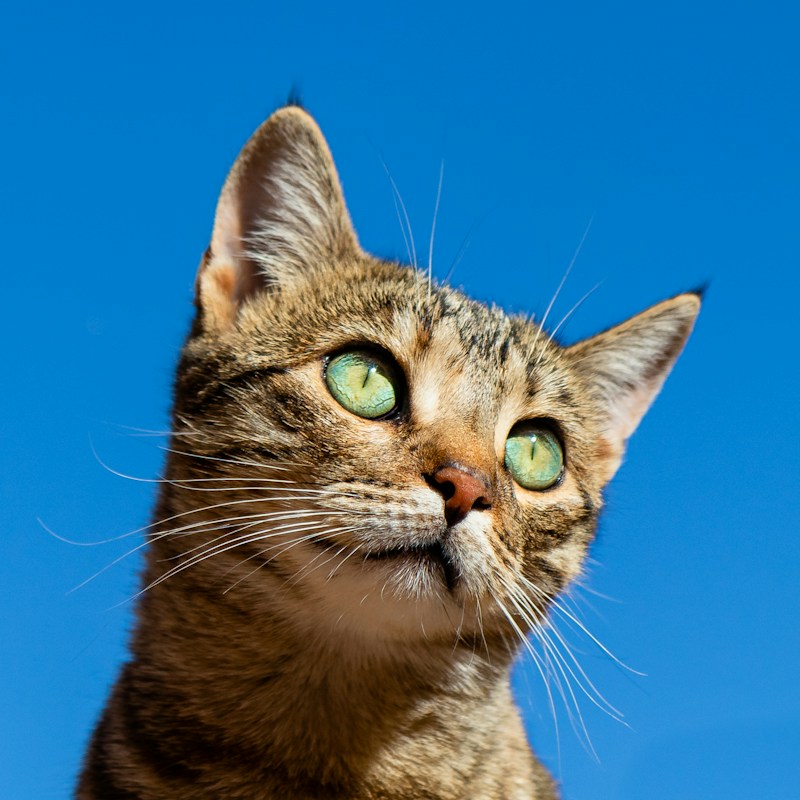
- Ears forward -- interested, alert, engaged
- Ears flat back -- frightened or aggressive (the universal "back off" signal)
- Ears rotating like satellite dishes -- processing sounds, deciding how to feel
- Whiskers forward -- curious, engaged
- Whiskers flat against the face -- scared or defensive
The Belly Trap
A dog showing their belly usually wants rubs. A cat showing their belly is usually saying "I trust you enough to show you my vulnerable side" -- NOT "please touch this." Many cats will present their belly and then immediately attack the hand that touches it. This is not deception. You just misread the signal.
Why It Matters
Understanding body language prevents bites, scratches, and stress for everyone. It also deepens your bond. When you respond correctly to what your pet is actually saying, they learn that you're listening. And that makes them trust you more.
Stay in the loop
Sign up for our weekly pet newsletter and never miss a story.